
The short answer
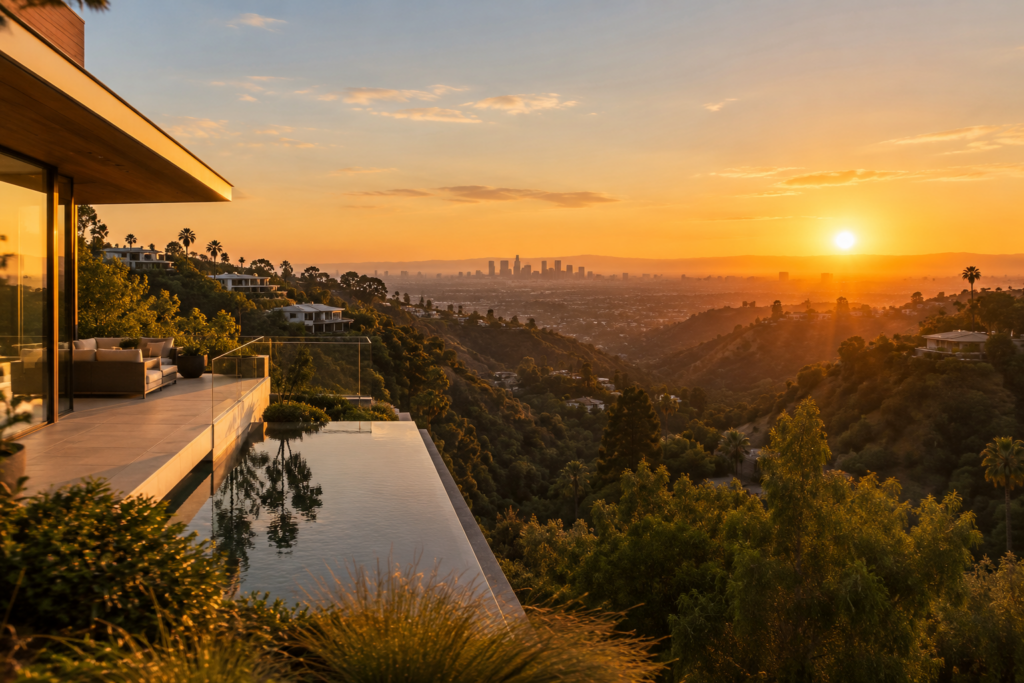
Living in a Los Angeles canyon means trading a little convenience for a lot of privacy, light and landscape. Whether that trade works for you comes down to details most buyers never notice on a single showing.
I live in Stone Canyon, own property in the canyons of Los Angeles, and sell homes in canyons from Benedict and Coldwater to Franklin and the Hollywood Hills. The buyers who love canyon life long term are the ones who understood the trade-offs before they signed. The ones who regret it usually toured once, on a sunny Saturday at 2 p.m.
Here is what actually shapes daily life in a Los Angeles canyon:
- Microclimate. Valley-side canyons run hotter in summer. Westside canyons closer to the coast see more marine layer.
- Traffic noise. Coldwater Canyon, Benedict Canyon and Laurel Canyon are commuter routes between the Valley and the Westside. A house on the main road lives differently from one two turns up a side street.
- Wildfire and insurance. This is now the single biggest variable in canyon ownership costs. Check it before you fall in love.
- Access. Narrow, winding roads affect your commute, deliveries, guests and emergency evacuation.
The rule I give every client: see the house three times. Once in the morning, once at commute hour, and once when it’s hot or windy.
How do Valley-side and Westside canyons differ in climate?
The Santa Monica Mountains split LA’s canyons into two climates. Valley-side canyons like Stone Canyon in Sherman Oaks and the Studio City canyons are warmer and drier in summer. Westside canyons such as Mandeville, Benedict and Franklin sit closer to the ocean’s influence and stay milder.
Within a single canyon, it shifts again. A home on a shaded bend near the canyon floor can feel noticeably cooler than one on an exposed ridge near Mulholland. Slope direction matters as much as the zip code.
What I tell buyers:
- South- and west-facing slopes get the strongest afternoon sun. Gorgeous light, real heat in August and September.
- Canyon floors hold cool air and shade. Lovely in summer, damp in winter.
- Ridgelines get the views and the wind.
Which LA canyons get the most fog?
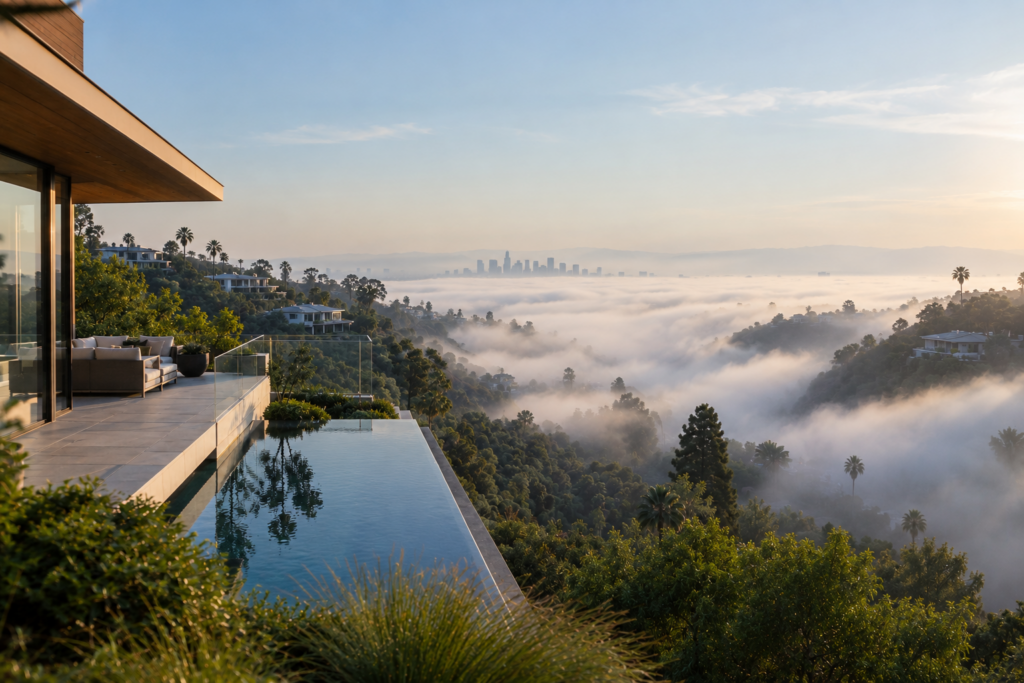
The closer a canyon is to the coast, the more often the marine layer reaches it. Westside canyons get the gray mornings of May and June far more than Valley-side canyons, where the mountains usually block it.
I think fog is part of the romance. Soft light on Neutra-style glass and wood is beautiful. But a view home that’s sold on its sunset photo feels very different at 9 a.m. in June, when the view is a white wall.
On a foggy-side home, check:
- Window and door seals, and any musty smell in lower levels
- Drainage around retaining walls and the downhill side of the house
- Whether the house still feels warm and bright when the view disappears
Treat dampness as a building-condition question for your inspector, not just “the canyon.”
Are canyon homes quiet?
Secluded doesn’t mean silent. The biggest noise factor in LA’s canyons is whether the house sits on a through road.
Coldwater Canyon, Benedict Canyon and Laurel Canyon carry heavy commuter traffic between the Valley and the Westside at rush hour. Mulholland draws motorcycles and sports cars on weekends. Hillsides also bounce sound, so a car on the road below can sound closer than it is.
This shows up in value. When I price a home that fronts a main canyon road, I adjust it against comparable homes on quieter side streets. Buyers will pay for the address, but they discount the traffic.
Construction is the other variable. In Bel Air and Beverly Crest, the City of Los Angeles applies a Hillside Construction Regulation district. It limits exterior construction and hauling to weekdays, allows only interior work on Saturdays, and stops grading and hauling on Red Flag days. Other hillside areas follow the citywide rules, so check which applies to your street with LADBS.
How to test it:
- Visit at 8 a.m. and 6 p.m. on a weekday
- Stand in the primary bedroom with the windows open, then closed
- Look for active permits and scaffolding on neighboring lots
What wildlife will you see living in an LA canyon?
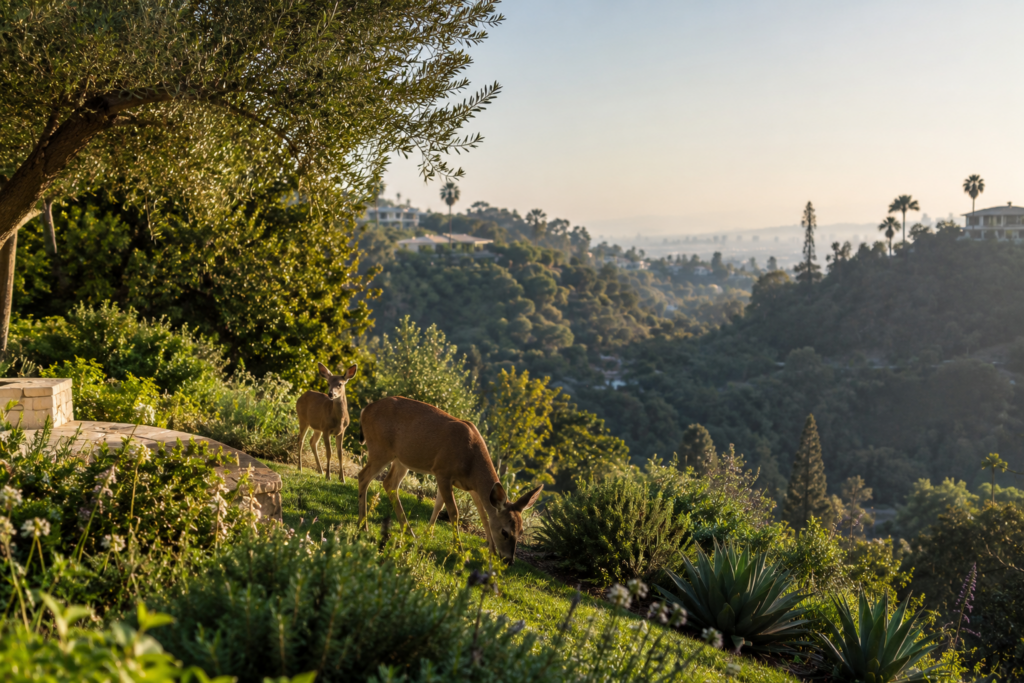
Expect coyotes, deer, hawks, owls, raccoons and the occasional rattlesnake in the warmer months. The Santa Monica Mountains are also home to mountain lions, which the National Park Service has tracked for years. Sightings are rare, but they happen.
For most of my clients, this is part of the appeal. Waking up to hawks over the canyon is why you don’t live in a condo on Wilshire.
It does change a few habits:
- Small dogs and cats need a secure yard and supervision at dawn and dusk
- Trash and pet food stay inside or in locked bins
- Deer will eat your roses, so plan landscaping with that in mind
Ask the seller about recurring pest or wildlife issues, and have your inspector look for entry points under decks and in attics.
How do wildfire zones and insurance affect buying a canyon home?
Since the January 2025 fires, insurance has become the deal-maker or deal-breaker on canyon homes. Get a quote before you write an offer, not during escrow.
Check the fire map first. In 2025, CAL FIRE released the first major update to Los Angeles County’s Fire Hazard Severity Zone maps in over a decade. For city areas, the maps now show Moderate and High zones, not only Very High, and the LAFD expects more parcels to be affected. A zone change can bring new building and brush-clearance requirements. Look up the exact address.
Then check insurance. More homeowners are landing on the California FAIR Plan, the state’s insurer of last resort. Its policy count grew 44% to about 668,600 by the end of 2025, and new and renewed FAIR Plan policies are priced at a 29.1% average rate increase from October 15, 2026. The FAIR Plan covers fire only, so most owners also need a separate “difference in conditions” policy for everything else.
What I ask for on every canyon home:
- The seller’s current carrier, premium and any non-renewal notices
- Records of brush clearance, ember-resistant vents, roof class and other hardening work
- A quote from your own broker on the exact address, before offers are due
- Two ways out by car, and whether the street fits a fire engine
A canyon home can still be a great buy. You just want to know your carrying cost before you fall in love, not after.
What is the commute like from an LA canyon?
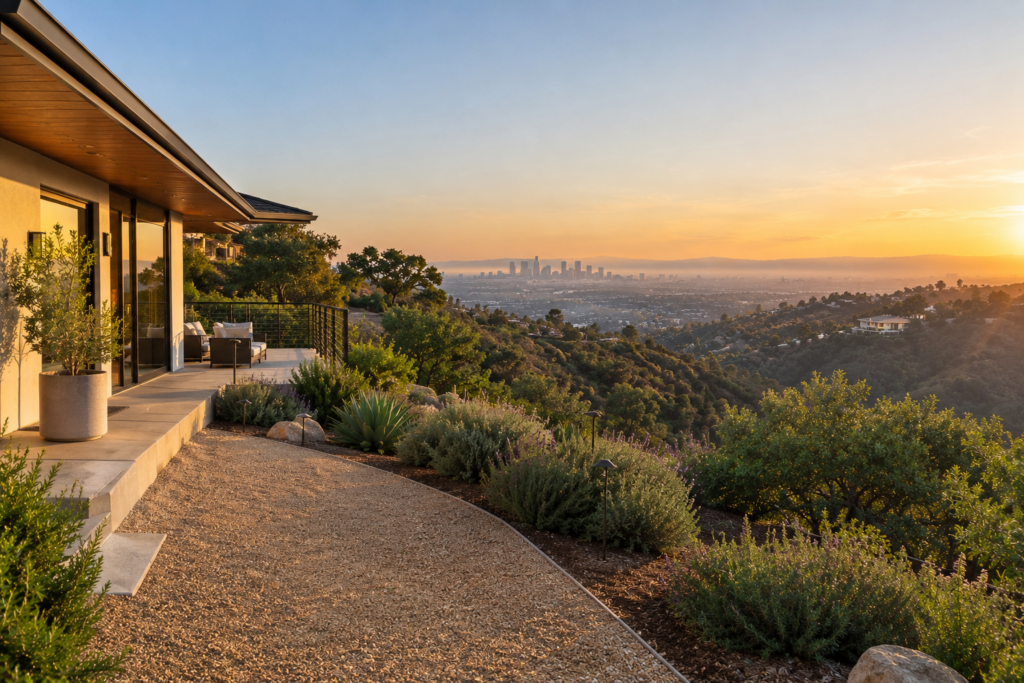
Canyon commutes are short on a map and long at 8 a.m. Most canyons have one main road out, so a single accident or road closure can stop everything.
A few patterns I see:
- Valley-side canyons like Stone Canyon in Sherman Oaks are quick to Ventura Boulevard and the 101, then you join everyone else crossing the hill.
- Coldwater and Benedict put you in Beverly Hills fast off-peak, but you share the road with the whole Valley at rush hour.
- Side streets high in the hills add switchbacks, blind curves and narrow lanes, which matter at night, in rain and for guests who don’t know the road.
Drive your real routes at your real hours before you buy: school drop-off, the office, the airport, the grocery store. Then test the driveway. A steep approach that’s fine in a Range Rover can be a problem for delivery trucks, contractors and older parents.
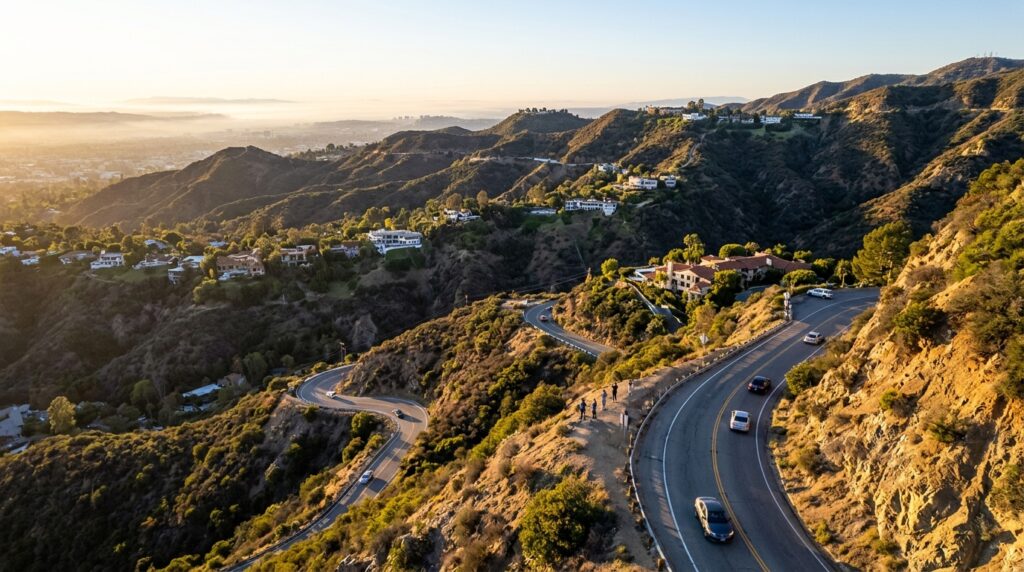
Selling a canyon home: why some sit on the market
Everything above is what buyers find on their second visit. When a canyon listing sits, it’s usually because the marketing promised one thing and the second visit showed another.
The patterns I see most:
- Photos shot only at golden hour. Buyers arrive on a gray June morning and feel misled. Show the home honestly, and schedule showings when it’s at its best.
- Road noise priced like a side street. Buyers discount it whether you do or not. Price for it up front and the home sells. Ignore it and the market prices it for you, months later.
- No insurance answer. If a buyer can’t get a quote during escrow, the deal falls apart. Have the current policy, premium and hardening records ready before you list.
- No story for the setting. Canyon buyers are buying a way of living, not square footage. The marketing has to show the architecture, the light and the privacy, and answer the practical questions before they’re asked.
If your canyon home has been on the market longer than it should, the setting usually isn’t the problem. The pricing and presentation are.
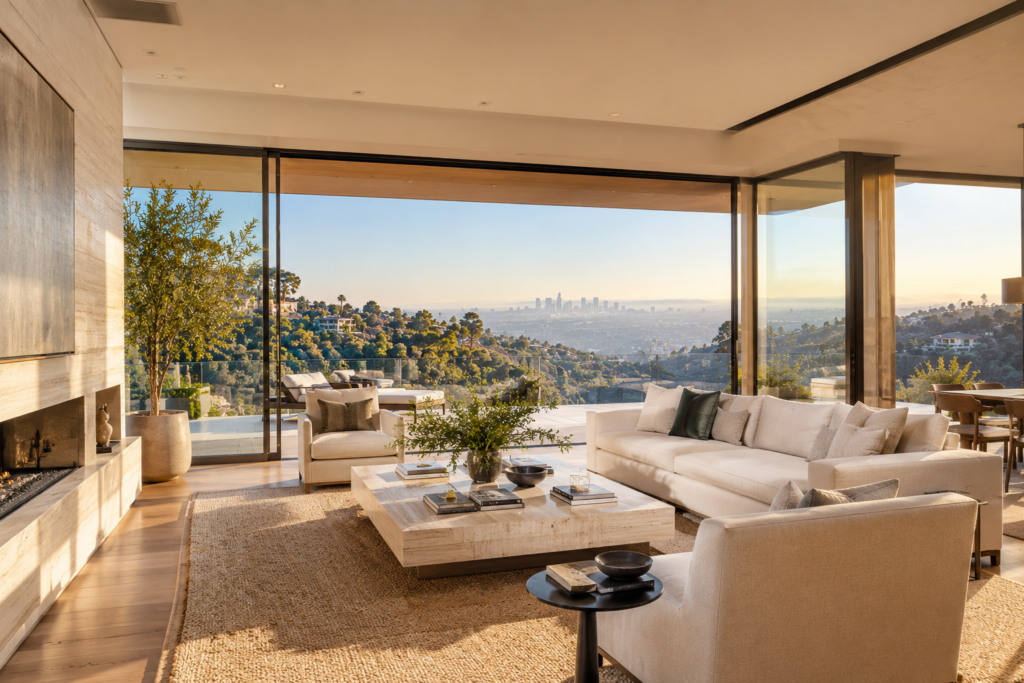
Canyon home checklist before you make an offer
| What to check | How to check it |
|---|---|
| Fire hazard zone | Look up the exact address on CAL FIRE’s zone map |
| Insurance | Get a quote on the address before offers are due; ask the seller for carrier, premium and non-renewals |
| Fire hardening | Brush-clearance records, roof class, ember-resistant vents |
| Road noise | Visit at 8 a.m. and 6 p.m.; listen from the primary bedroom |
| Construction | Active permits nearby; whether a hillside construction district applies |
| Microclimate | Visit morning and afternoon; note shade, heat and fog |
| Wind | Sit outside for ten minutes; look for a sheltered spot |
| Access | Drive your real routes; test the driveway at night |
| Drainage and slope | Inspector plus a geotechnical review if there are retaining walls |
| Future plans | Confirm what you can add or change with a permit expediter or architect |
How should a canyon home be designed for the site?
I asked my husband, architect Marius Laurinkus, who spent eight years with Richard Landry and now works at McClean Design, how he approaches canyon sites.

Frequently asked questions
Is Benedict Canyon a good place to live? For buyers who want privacy and nature minutes from the Beverly Hills flats, yes. Homes on Benedict Canyon Drive itself carry commuter traffic, so side streets usually feel quieter. Check the fire zone and insurance on the exact address.
Is Coldwater Canyon noisy? Coldwater Canyon is a main route between the Valley and Beverly Hills, so homes fronting it hear rush-hour traffic. Homes a few turns up a side street can feel completely different.
Which LA canyons get the most fog? Westside canyons closer to the coast see the marine layer most, especially in May and June. Valley-side canyons are usually sunnier and hotter.
How do I check a home’s fire hazard zone? Search the exact address on CAL FIRE’s Fire Hazard Severity Zone map. The 2025 update added Moderate and High zones in city areas, so a home’s designation may have changed.
Can you still insure a canyon home in Los Angeles? Usually, but it may cost more and take longer. Some owners end up on the California FAIR Plan plus a separate policy. Get a quote on the exact address before you make an offer.
About Brooke Elliott Laurinkus

Brooke Elliott Laurinkus is Estates Director at Christie’s International Real Estate Southern California, ranked in the top 0.05% of agents nationally by RealTrends for 2025. She has more than $300 million in career sales, including 10048 Cielo Drive in Benedict Canyon and 21830 Pacific Coast Highway in Malibu. She lives in Stone Canyon, owns property across the canyons of Los Angeles, and specializes in architectural and canyon homes across the Westside and the Valley. DRE #01965650.
Thinking about buying or selling a canyon home? Contact The BEL Group for a private consultation.
Sources
- LA County Fire Hazard Severity Zone update (City of Sierra Madre summary)
- LAFD: 2025 CAL FIRE map recommendation
- InsuranceNewsNet: FAIR Plan rates rising 29.1%
- The Cool Down: FAIR Plan rates from October 15
- LAMC 13.20: Hillside Construction Regulation district
- LADBS construction hours
General information, not legal, insurance or engineering advice. Confirm property-specific details with the relevant agency and qualified professionals.